Standard SaaS has a hundred predecessors. When you design a CRM, a billing tool, or a project tracker, the user already knows roughly where the buttons should be. Designers inherit patterns, so the work is mostly hierarchy and polish.
AI-native products don't get that inheritance, and that's the whole problem. How do you design something with no precedent so that users get it in seconds? With an AI product, the interface alone can make it or break it.
We've already published a broader rec list of design agencies that work on AI-native products. This one is narrower and answers a different question: who is the best UX/UI design agency for AI startup products?
This is Habitat's answer. But first, let's see why UI/UX for AI products is a separate challenge altogether.
TL;DR: 7 best UX/UI design agencies for AI startup products
- Why this list exists: AI products break standard UX because they have varying outputs, dense screens, and no patterns to borrow.
- Habitat: Invents data-dense, trust-first interfaces from scratch and ships them to code.
- Eleken: Embeds a dedicated UI/UX designer on subscription, starting next week.
- Neuron: Tackles enterprise AI software where the challenge is complexity, scale, and design systems.
- UX studio: Plugs in a research-led UX team like an extension of your own.
- Contrast Studio: Drops an embedded senior designer into your team for steady, ongoing UI work.
- The Gradient: Builds prototypes with a real model running inside them.
- K&Z Design: Gives founders direct, no-middleman control over a data-heavy AI interface build.

Get the week’s best stories
Why standard UX thinking falls apart on AI products
In traditional UX, a user takes an action, and the system responds the same way every time: enter the same data, and you get the same result. AI breaks that foundation. The same input will produce different outputs, confidence varies, and edge cases are routine.
So the design job changes entirely. It is no longer about guiding people but more about building trust between human judgment and machine intelligence.
There are two reasons why this is unusually hard for AI startups, specifically.
First, AI products are dense and unfamiliar at the same time. AI tools tend to surface a lot at once, and they do it in product categories that often didn't exist a year ago. There's no settled pattern library to lean on, so the interface has to teach a brand-new workflow while staying legible.
Second, the failure mode is invisible, which makes it lethal. A normal app fails loudly. It crashes, throws an error, and shows a broken state you can see. An AI returns something confident, well-structured, but wrong.
Trust is already fragile. In the latest Bentley–Gallup survey, only about a third of Americans (31%) said they trust businesses to use AI responsibly, meaning two-thirds still don't.
No wonder then why 42% of companies abandoned most of their AI initiatives in 2025, up from 17% the year before, and the average company scrapped 46% of its AI proofs-of-concept before they ever reached production.
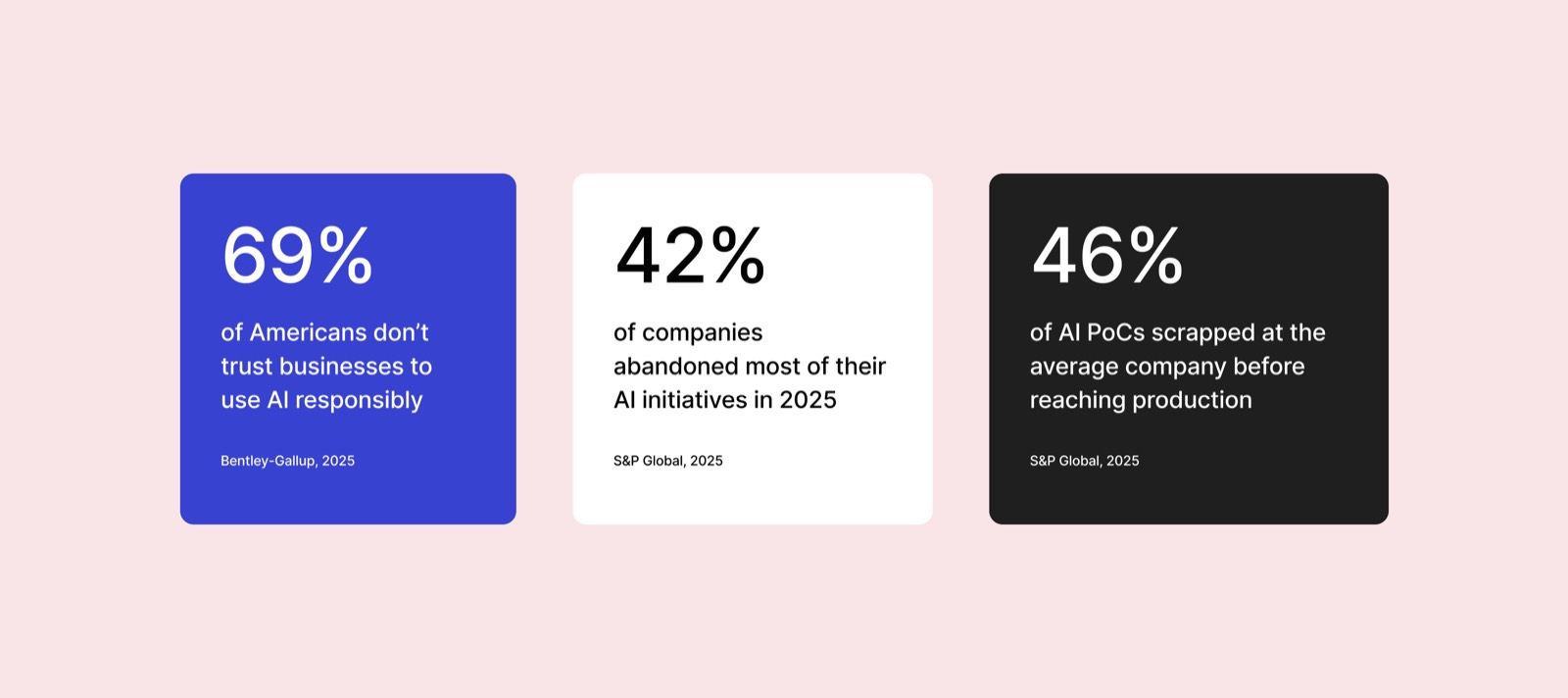
Plenty of those deaths get blamed on the model. Many are really expectation failures: the interface never set up what the system could do, never showed its reasoning, and never handed the user a way back when it slipped.
The four moments where AI interfaces break
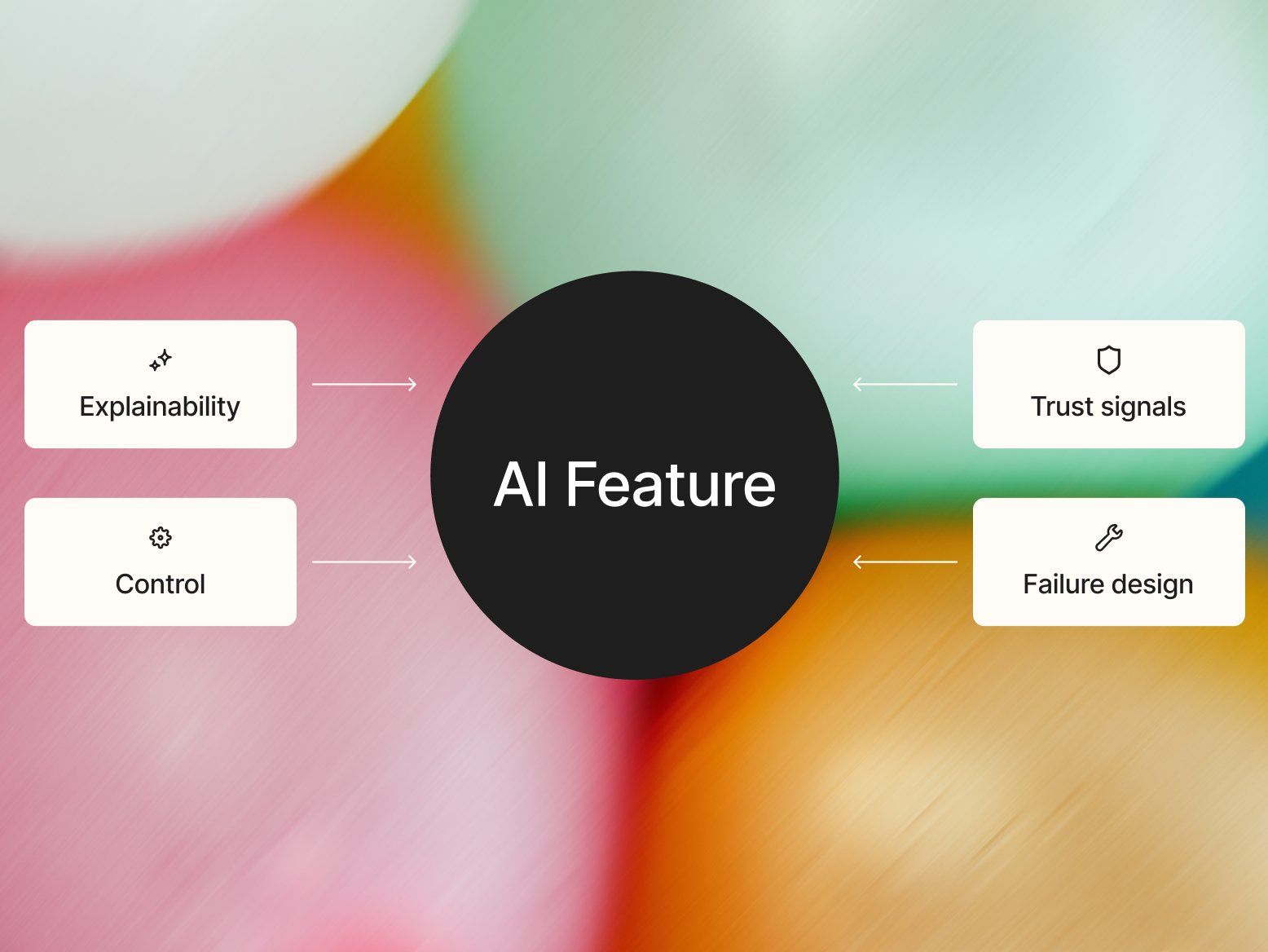
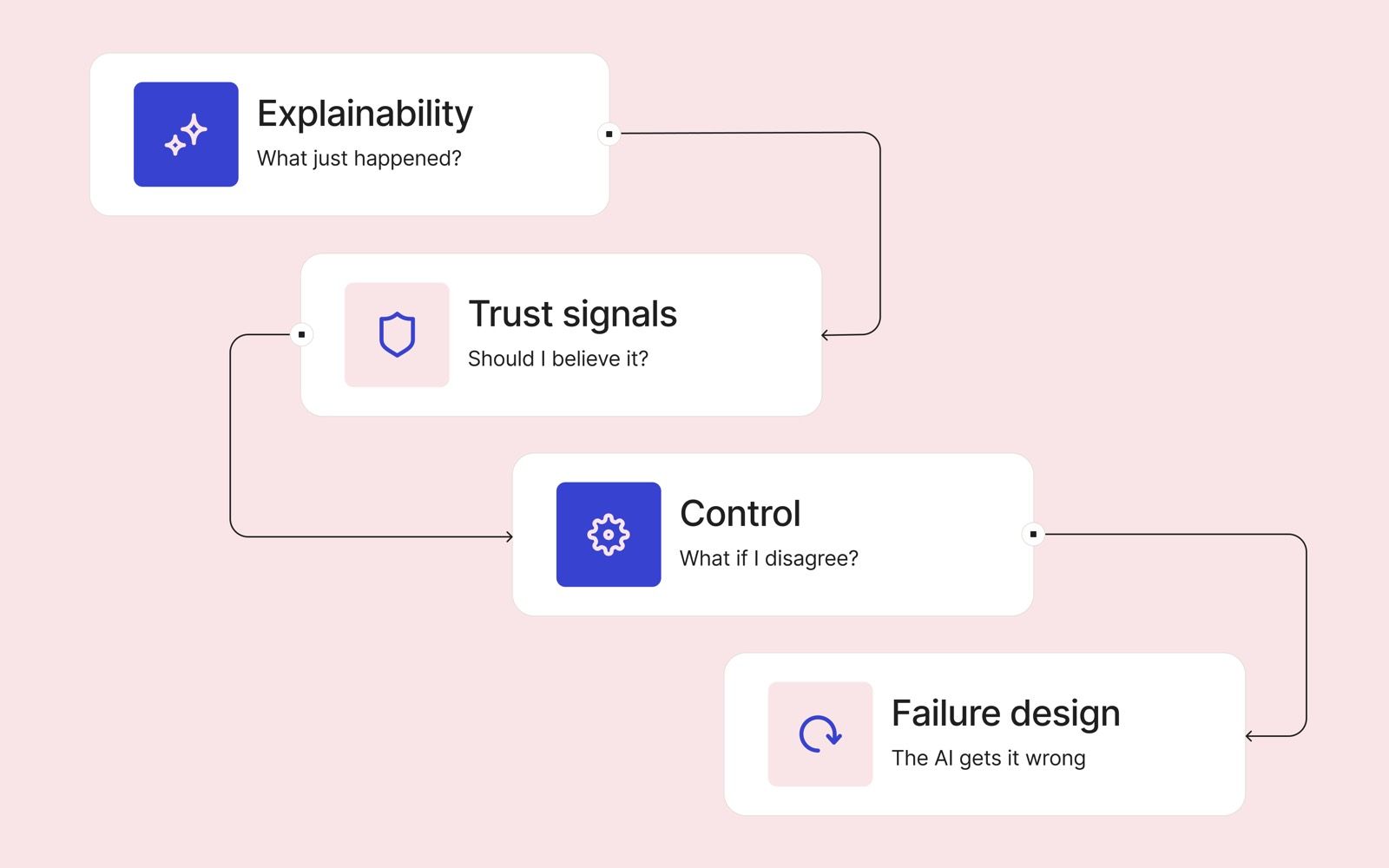
Designing AI products, we at Habitat keep seeing the same four breakdowns. We map them with a diagnostic we call AI Feature Design Fit:
- Explainability: "What just happened?" The user gets an output with no sense of where it came from, so they can't judge whether to act on it. The fix is making the system's reasoning visible, showing the steps and inputs behind a result.
- Trust signals: "Should I believe this?" The interface shows an answer, but gives the user nothing to anchor confidence in. The strongest products attach provenance to the output, so users can trace any claim back to where it came from.
- Control: "What if I disagree?" The AI decided, and there's no way to adjust, override, or ignore it. Designing in control with previews and editing keeps the user in the loop instead of being locked out.
- Failure design: "What happens when it breaks?" The one almost everyone skips. Because AI will be wrong sometimes, the interface has to make the breakdown visible, explain what went wrong, and offer a concrete next step rather than a dead end.
That's why the best UX/UI design agency for AI startup products treats trust as the first design decision. Every team below was screened for depth in product UI/UX for AI: agentic flows, data-dense dashboards, model-output screens, the trust and failure states.
One note on method. This isn't a ranking. We start with ourselves because we know our own constraints best, then hold everyone to the same standard. For each team, we've flagged where they fit and do not.Habitat’s top of the UX/UI design agencies for AI startup products
You probably understand that AI products don't behave like regular software. Outputs vary, the screens are dense, and there's rarely a pattern to copy. These 7 teams specialize in designing that interface layer.
Habitat
Perfect for AI products with no obvious reference point, where the category didn't exist last year.
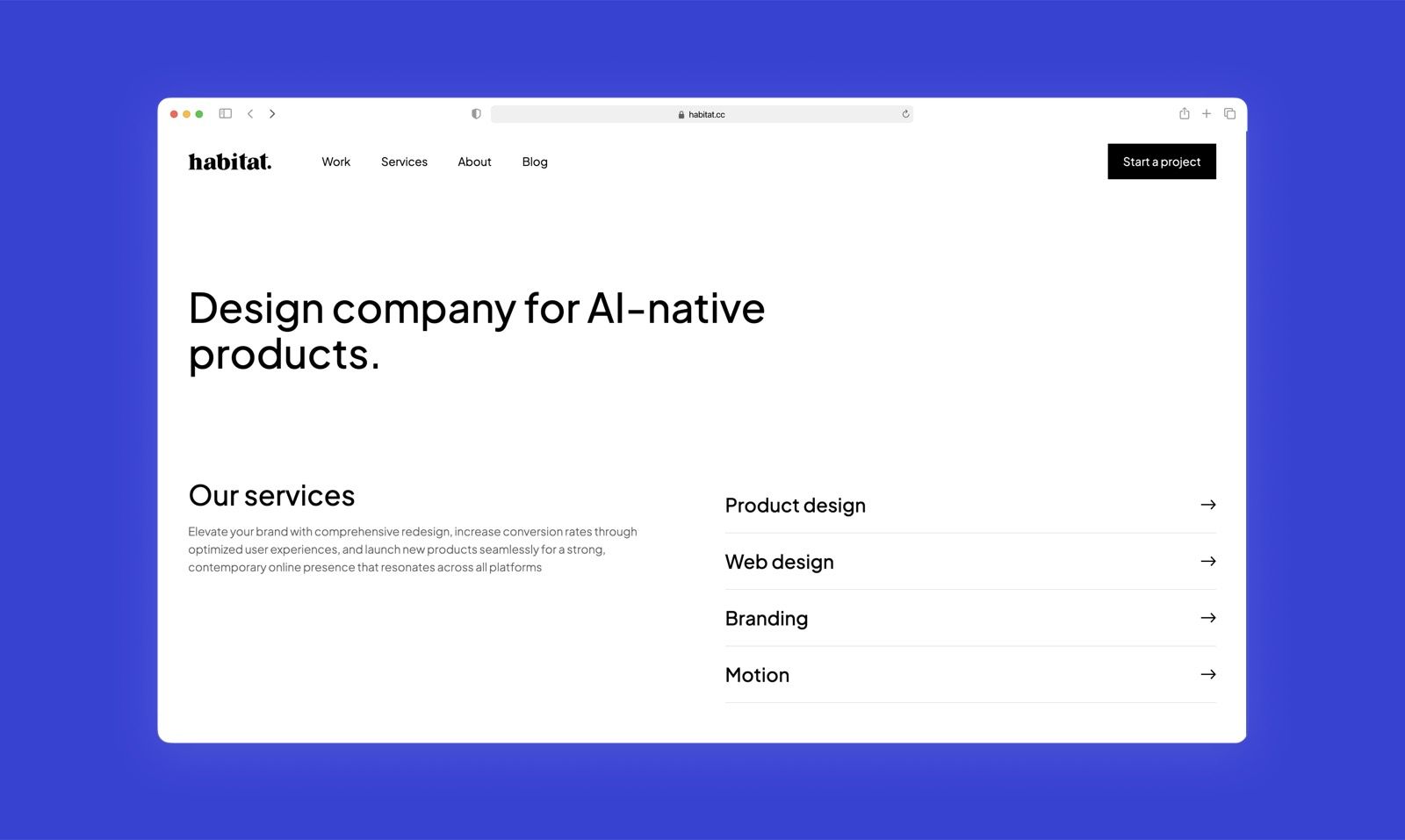
Founded in 2017 and working out of Ukraine and the Netherlands, we design UI/UX for AI-native startups from seed to Series A. Habitat holds a 5.0 rating across 52 Clutch reviews, and unlike studios that stop at a Figma file, we take the interface all the way to running code: Figma to Claude Code or Storybook, sites live on Framer or Webflow, so engineering inherits a working system.
We open every engagement with a two-week Blueprint sprint that maps where the product has to earn trust and how it should behave when the AI is uncertain, before a single final screen is drawn.
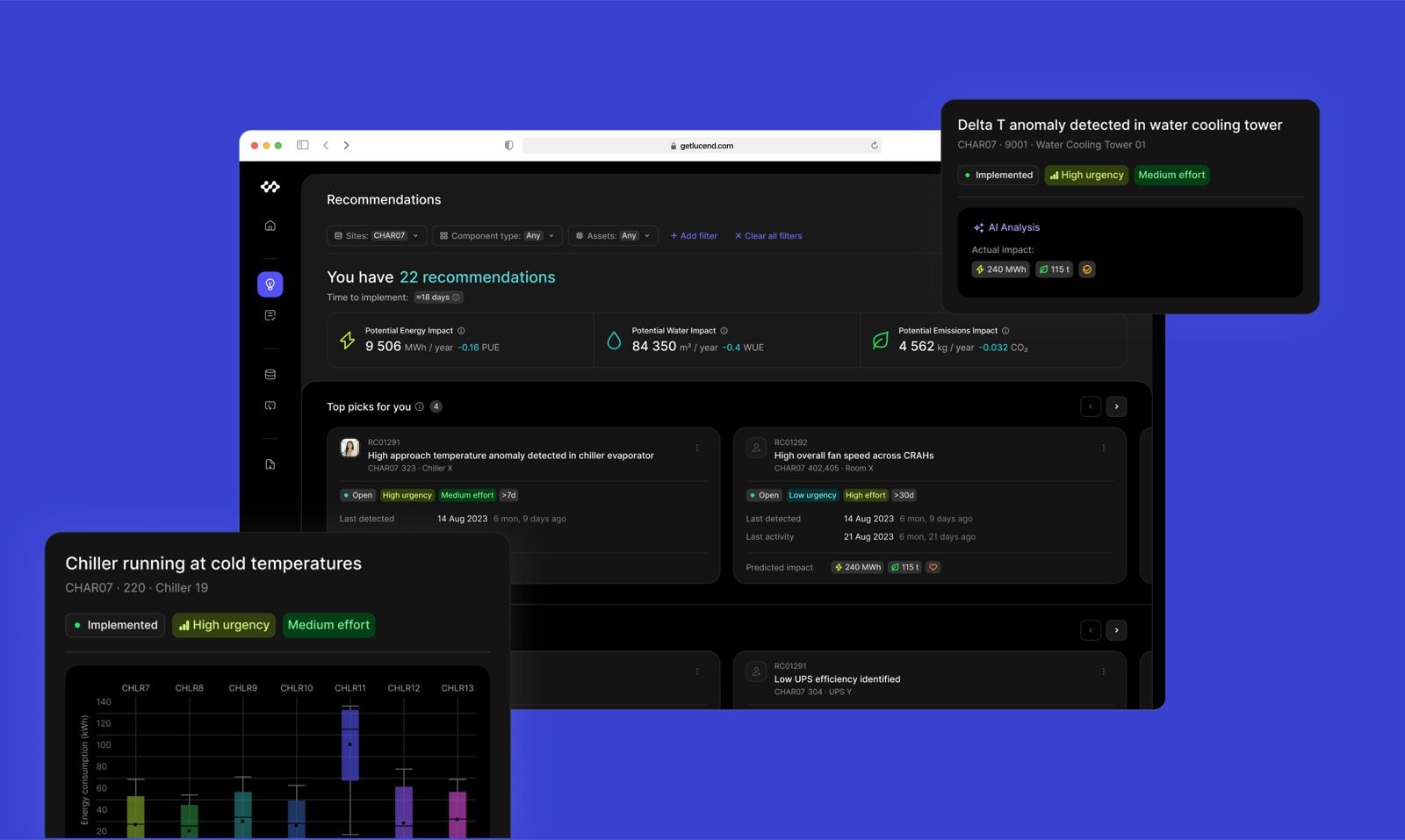
At Habitat, we're used to building products that have zero references. Lucend, for example, wanted to build an AI platform that monitors data centers and flags efficiency problems. We ran discovery from scratch, defined the product vision with the founders, and designed the data-dense screens.
The clickable prototype secured Lucend's first clients before the product even launched; the company went on to raise $3.3M, grow 13×, and win Amsterdam's Hottest Startup 2024 and the Yotta Innovate Arena.
For Bagel AI, an AI product analytics tool, Habitat shipped a new website in six weeks and built the launch suite around it.
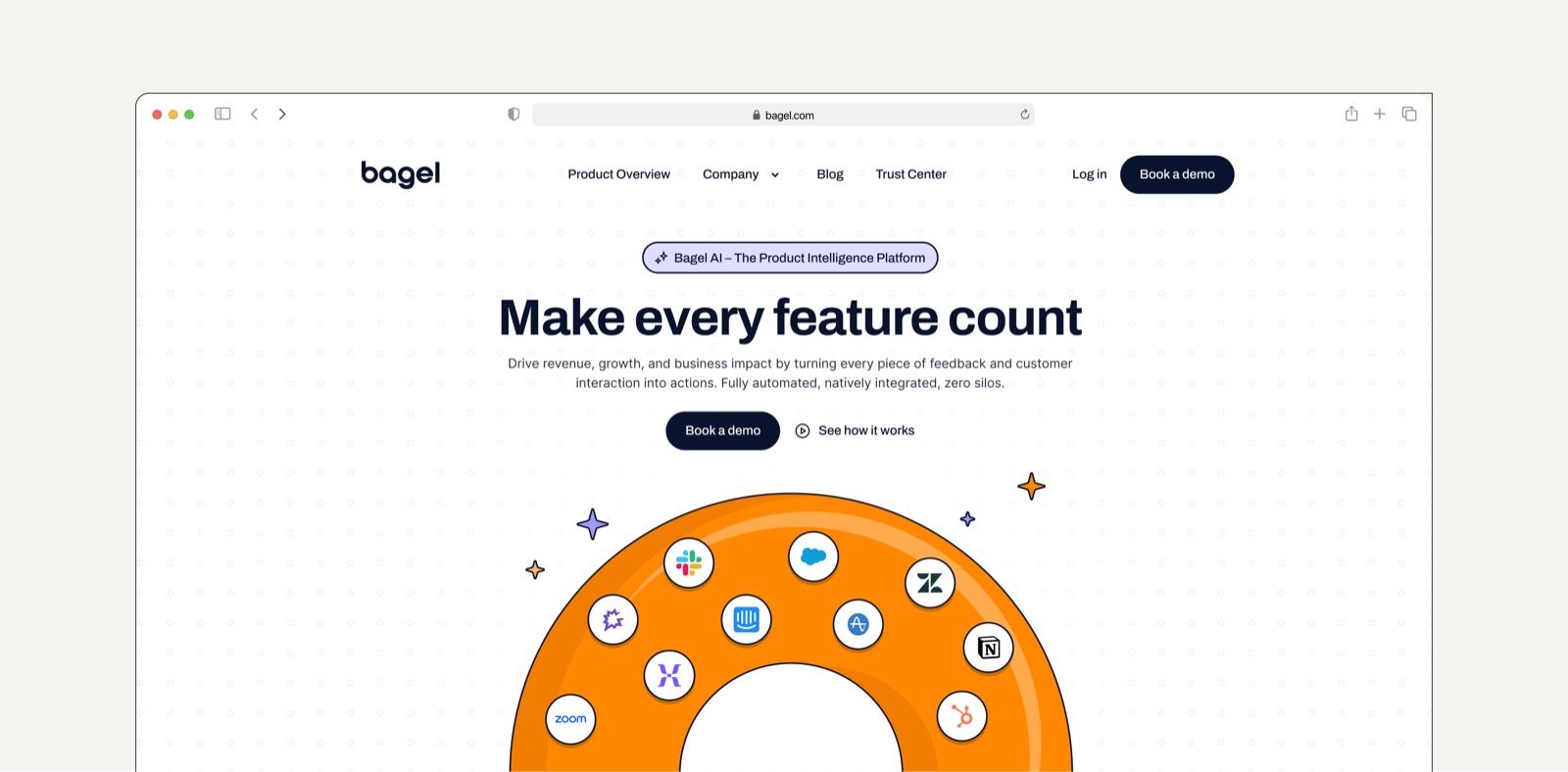
Bagel's $5.5M seed closed the same month the site launched, with 1,185% user growth in week one and a reported 28% lift in conversions afterward.
Where we are not the fit: you're post-Series B with a large in-house team that just needs extra hands on an existing system, or you want a dev shop writing production backend code alongside the design.
Eleken
Perfect for an AI SaaS product already in production that's growing faster than your design capacity.
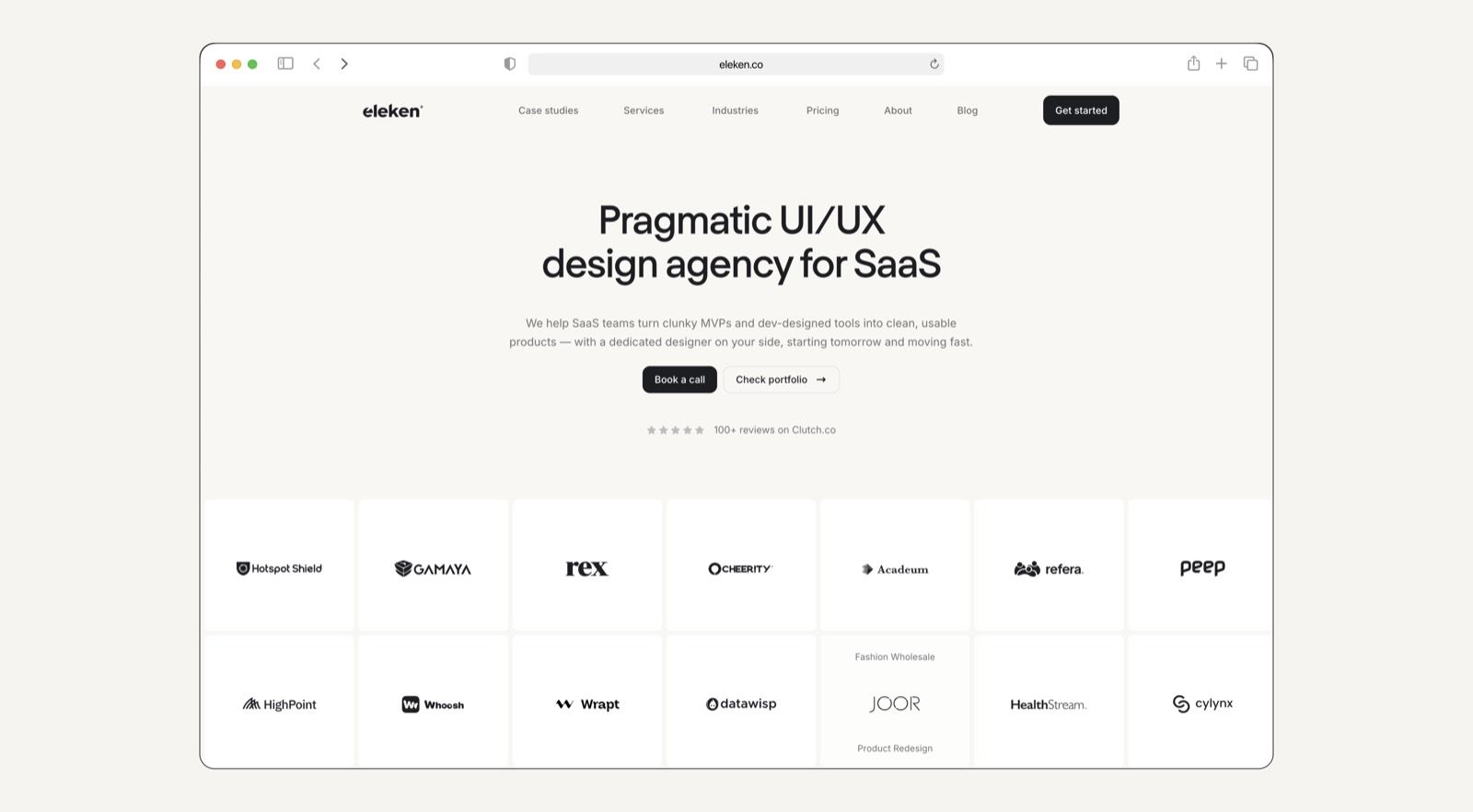
Eleken is a subscription-based product design agency for SaaS. You get a dedicated designer who embeds in your team, starts next week, and scales up or pauses with your roadmap, talking to you directly, with no project manager in the middle. With 122 Clutch reviews, they're the most independently verified team on this list.
Their Webcrumbs project shows how they work. It began as a three-day trial for a plugin screen, then grew into Frontend AI, a tool that turns prompts and images into UI, which went viral on Product Hunt, taking Product of the Day and Product of the Week with 1,200+ upvotes.
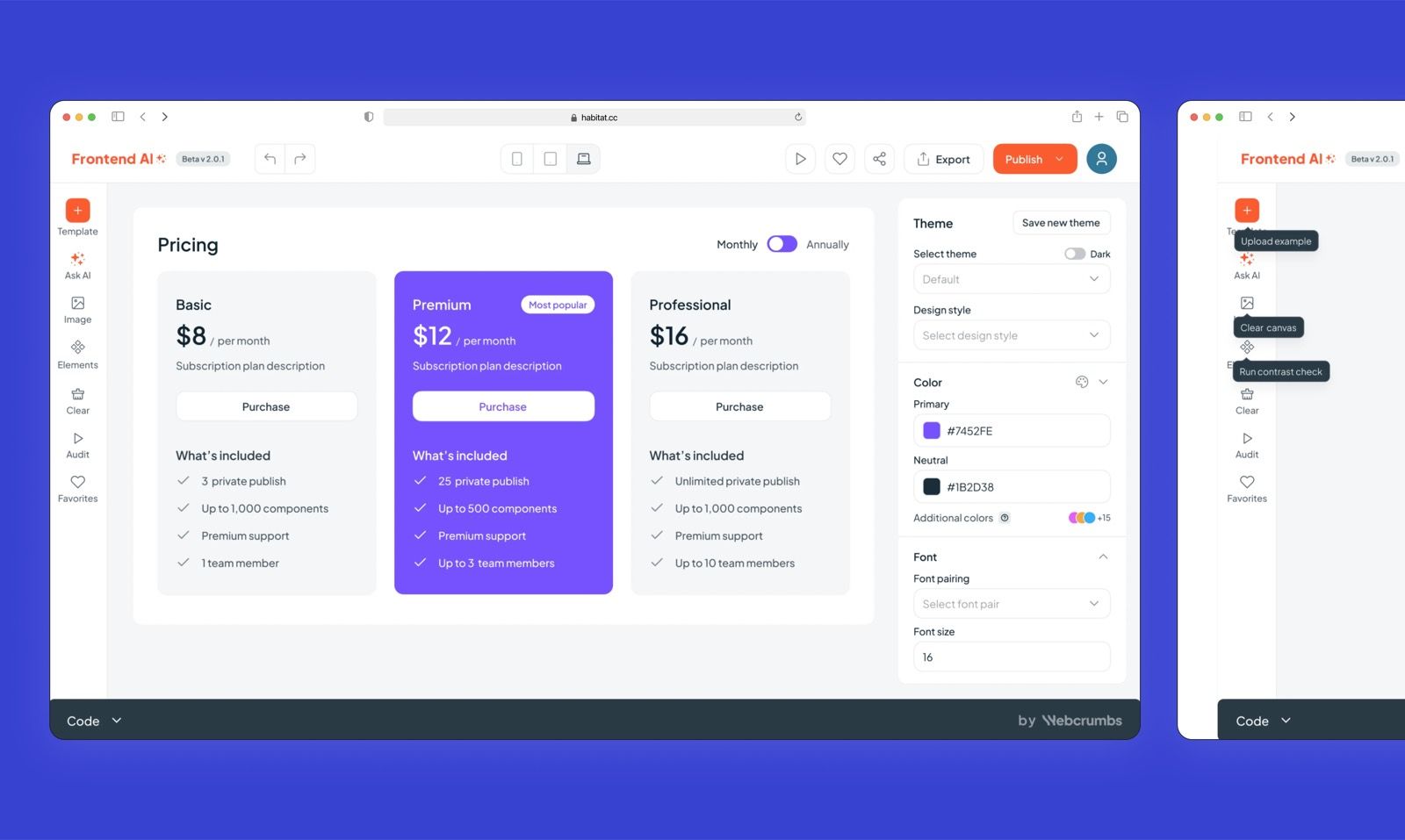
Elsewhere, they doubled Zaplify's (now Andsend) activation rates by reworking an AI sales product's UX, rebuilt Aampe so marketers could run AI campaigns without looping in developers, and have shipped product UX for AI tools across legal, sales, and content.
Where it's not the fit: Eleken is SaaS-only, subscription-based, and sets a ~$10K project floor. Brand and marketing-site work goes through their sister studio, TodayMade, so product and brand will require two teams.
Neuron
Perfect for complex, permissioned enterprise AI software.
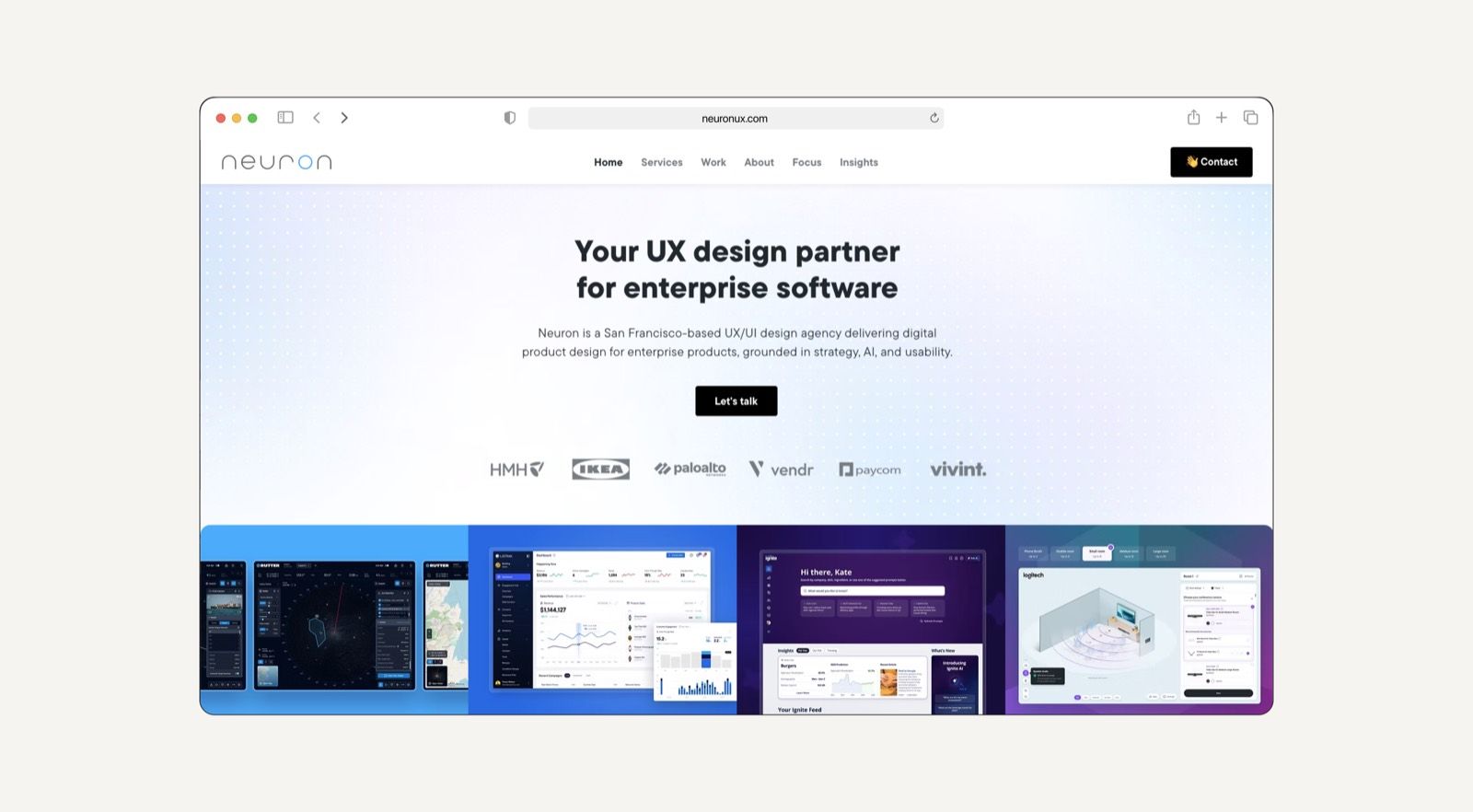
Neuron is a San Francisco UX/UI consultancy built for B2B workplace tools, with a 4.9 Clutch rating and a client list that includes Ikea and Palo Alto Networks. They have a dedicated practice at AI-driven products rather than treating AI as a tag on a brand deck.
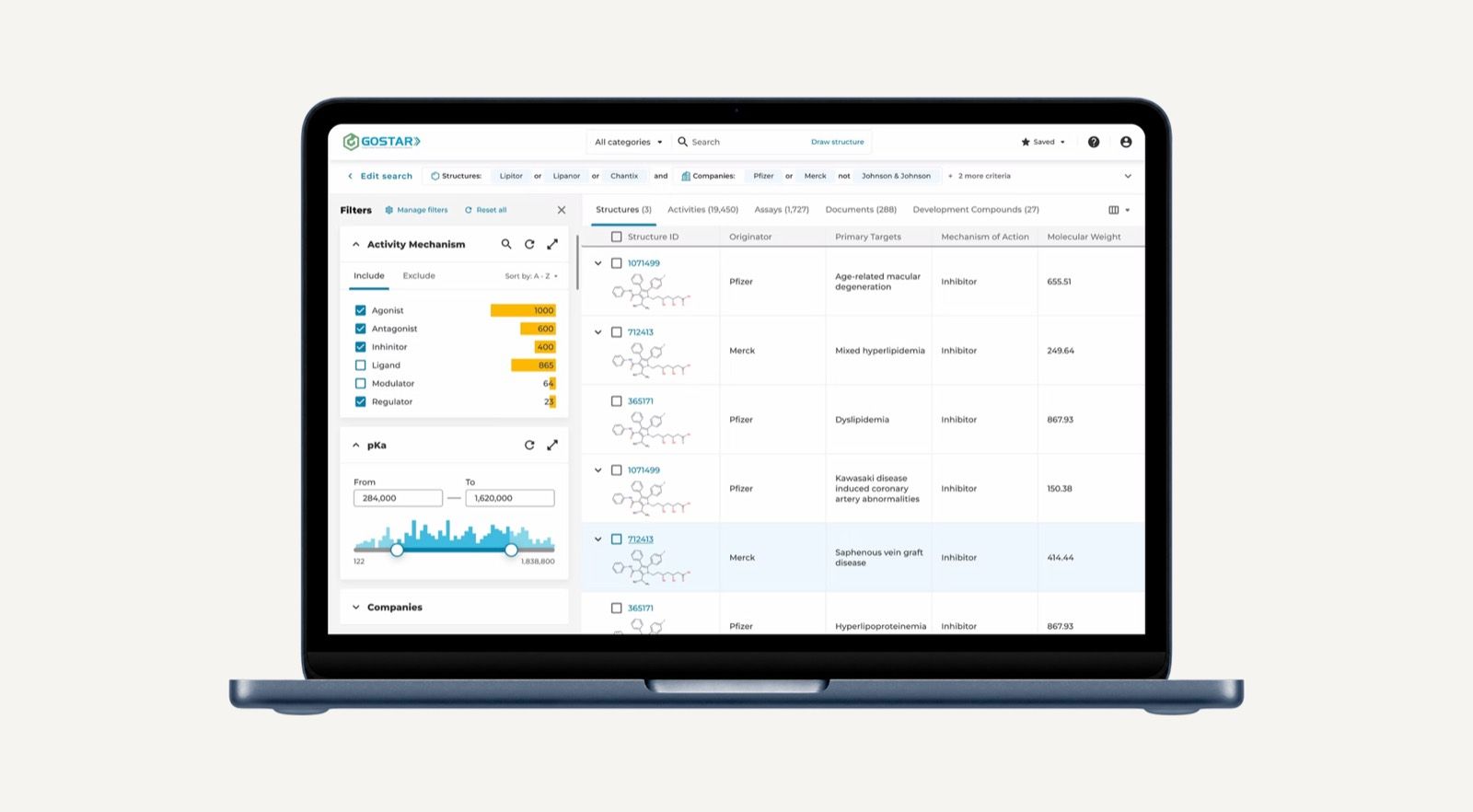
Their portfolio leans into the dense, decision-heavy interfaces AI products demand. For example, for GOSTAR, they reimagined search across a medicinal-chemistry database. This is the kind of data-retrieval UX where the interface has to make complex results legible.
Where it's not the fit: a pre-seed founder who needs an investor-ready prototype fast will find the process too heavy.
UX studio
Perfect for an AI SaaS product in production that needs a research-led UX team.
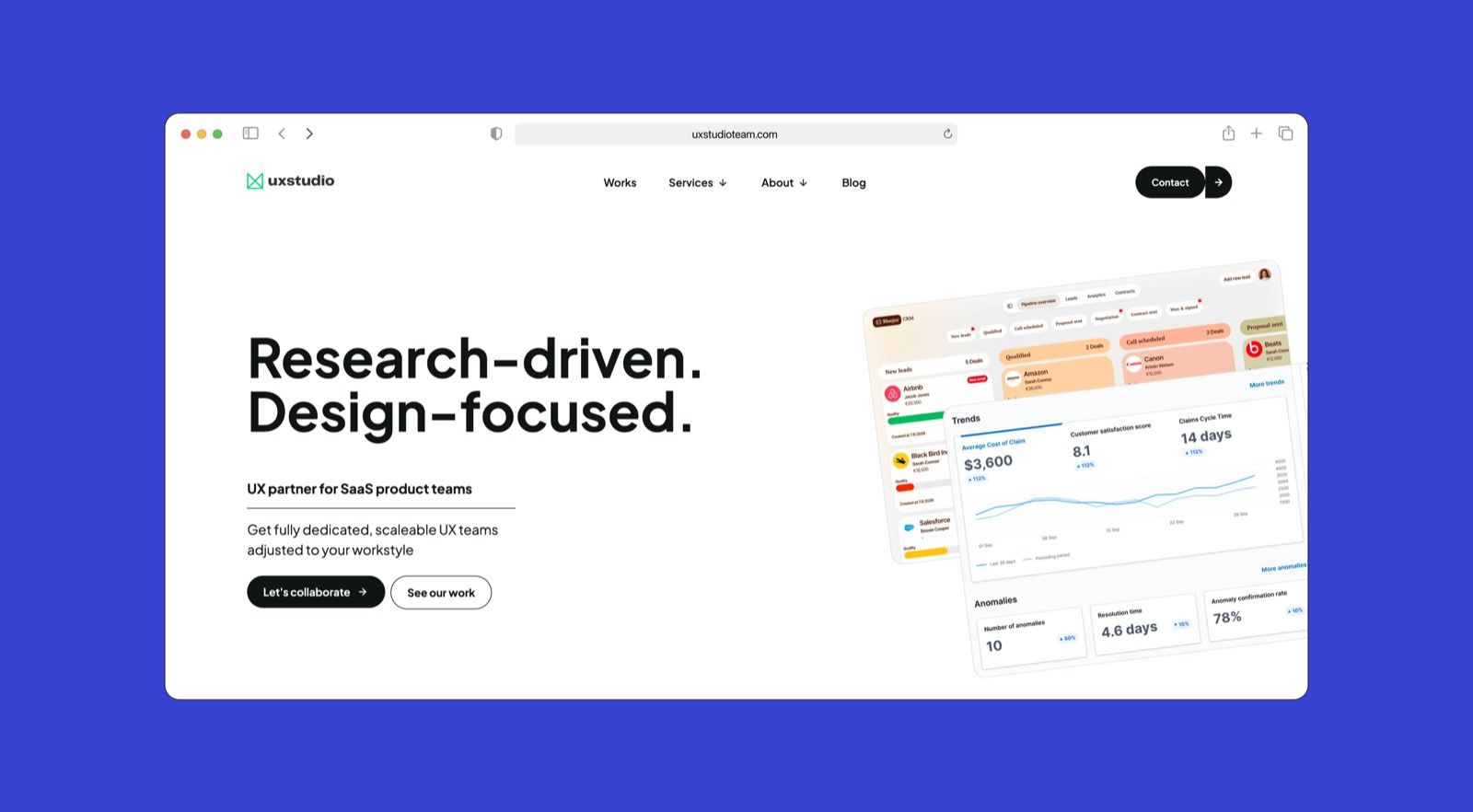
UX studio has operated since 2013 across 250+ clients, including Netflix, Google, Cisco, the UN World Food Programme, and Brenntag. Their differentiator is structural: they split designer and researcher roles, so the people drawing your screens are fed first-hand insight from people actually talking to your users.
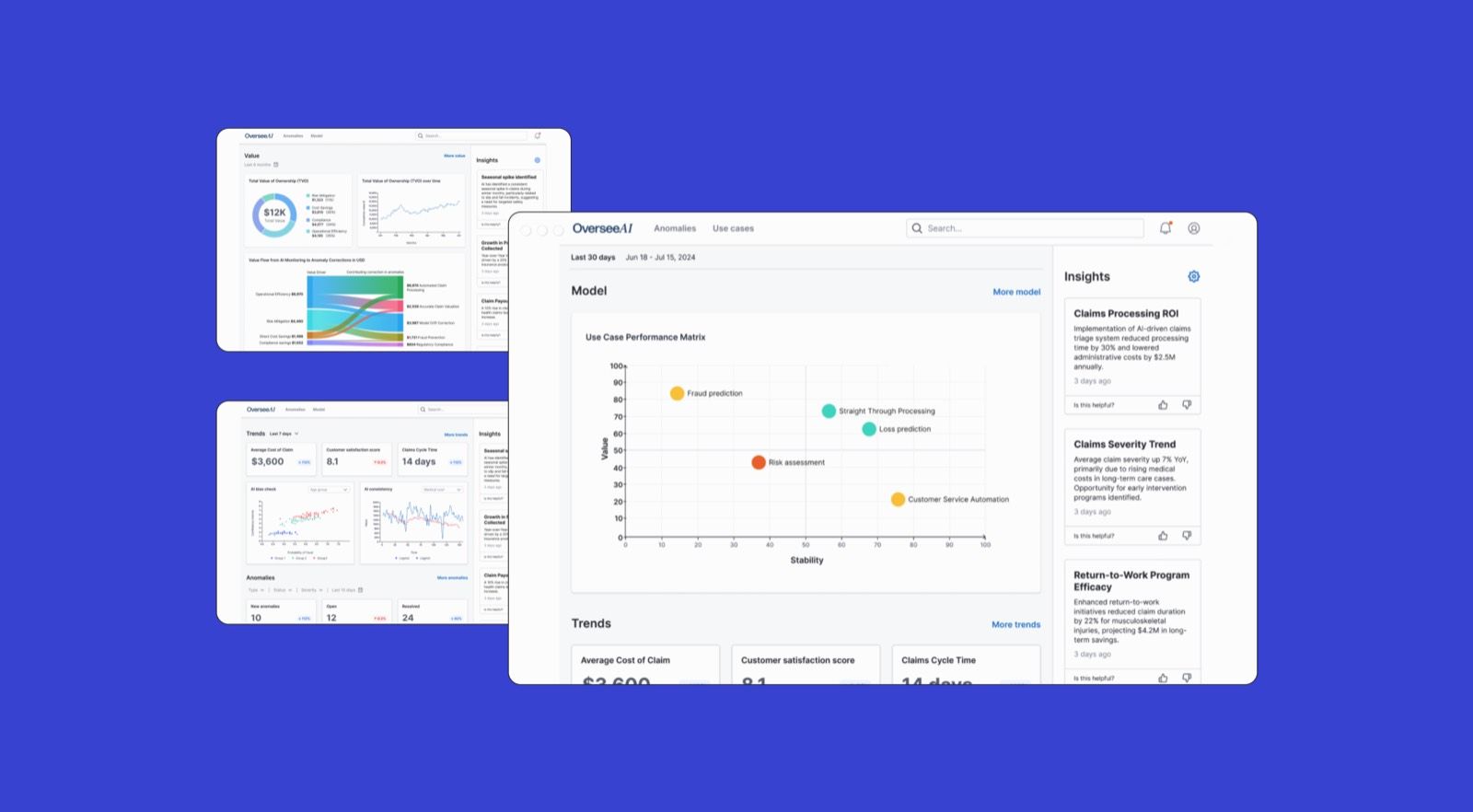
On AI specifically, they designed the chatbot UX for Finshape, an AI agent inside a personal-finance assistant; took Uxfolio from a blank page to a 36% conversion rate by introducing AI features; and built Oversee.ai, a platform that catches AI slip-ups before they cost insurers millions.
Where it's not the fit: their strength is ongoing, research-led product UX, not 0→1 brand and launch. If you need the whole package before demo day, this isn't your go-to.
Contrast Studio
Perfect for a growing tech company that wants senior UI/UX firepower inside the team by next week.
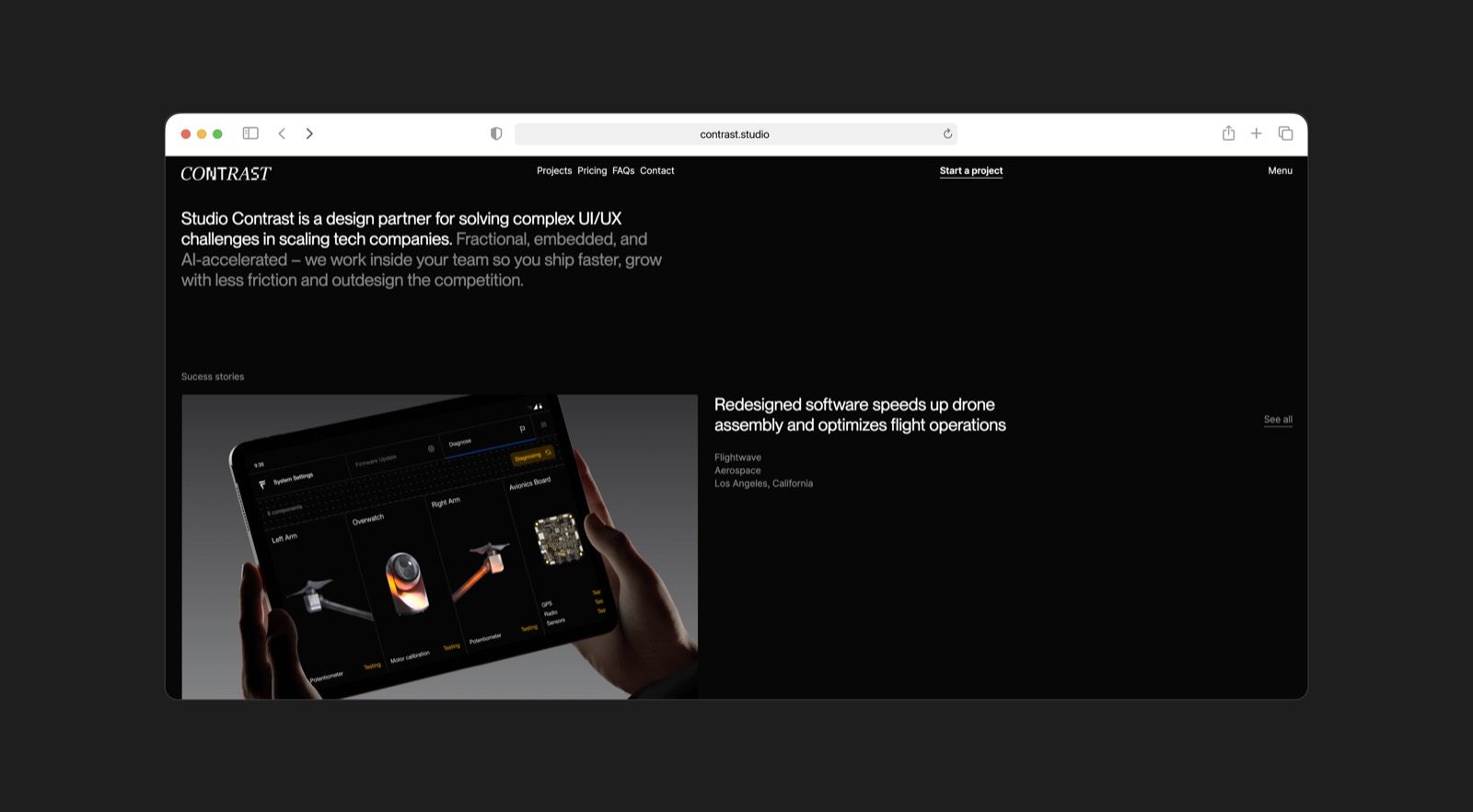
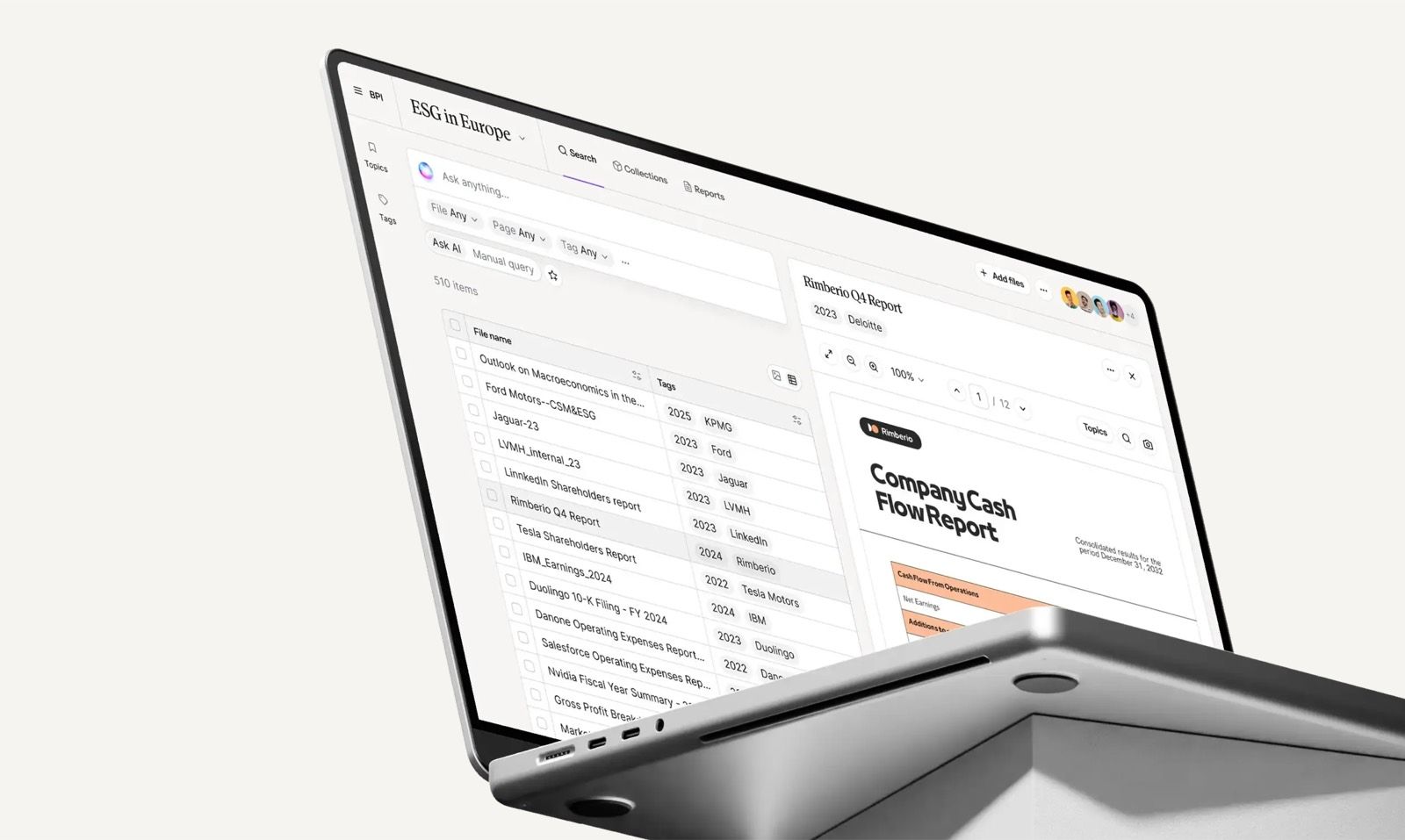
Contrast Studio is based in Romania with work hours adjusted to overlap US time zones. They embed a senior designer into your team on a subscription: work runs through a shared Notion board and Figma, shipping around two tasks a week, with a first iteration on a well-scoped task often inside 48 hours. A short paid trial (around two weeks) de-risks the start.
For Invisibly, a MarTech scale-up, they supported growth from 0 to over 30,000 users in ten months; for Cogny, a financial-compliance startup, a web-app redesign helped the team soft-pivot and raise over $4.5M; and for Havr, they shipped 50+ tasks improving a smart-lock access-control app.
Where it's not the fit: subscription-embed is great for ongoing UI work, but for a single intensive build, a project-based full-stack team is better.
The Gradient
Perfect for high-stakes AI in healthcare, fintech, and anything where a wrong answer carries real cost and where speed is not the defining factor.
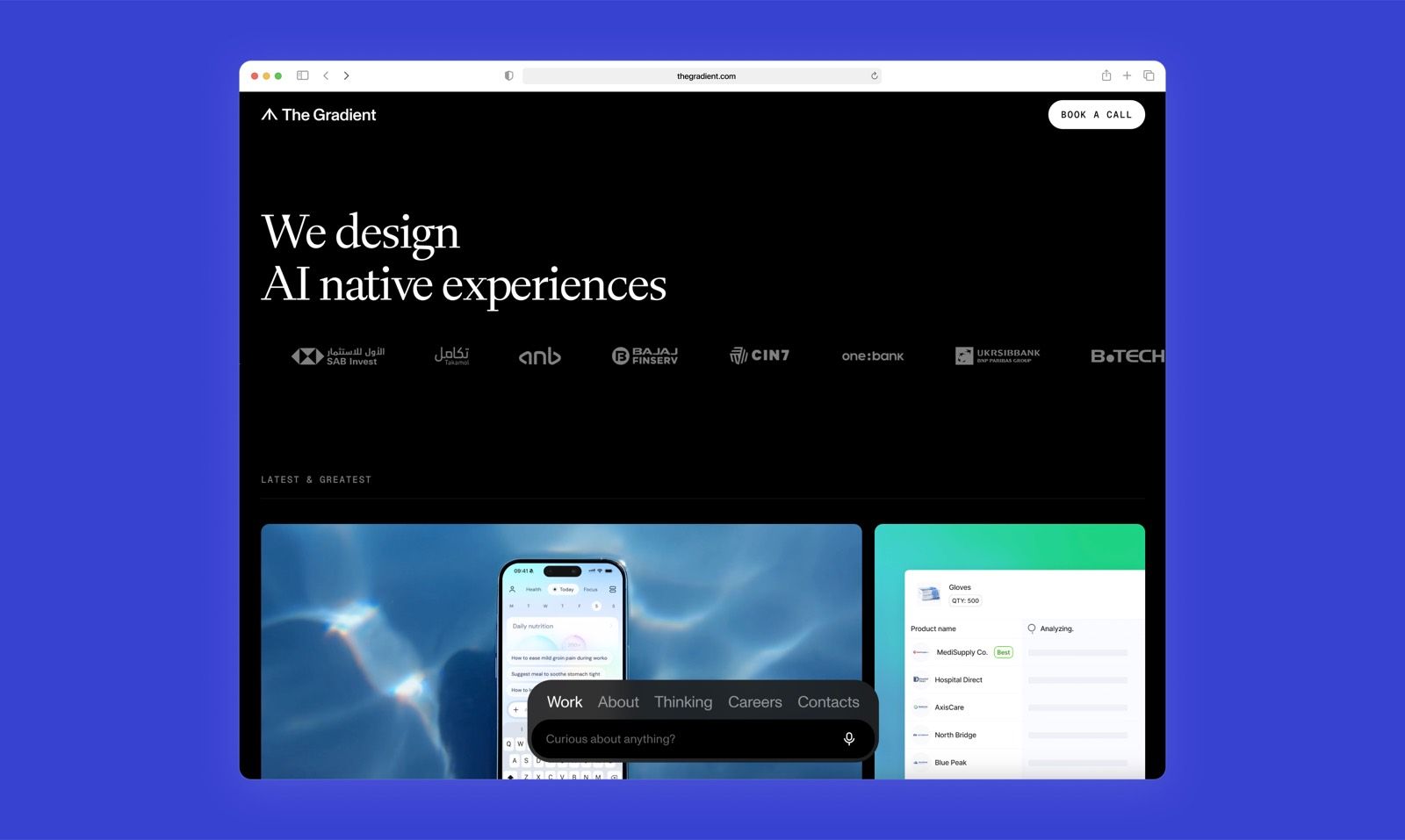
The Gradient is a small, senior team that runs a few engagements on purpose. Instead of months of static screens, they build working prototypes with real models and real data behind them.
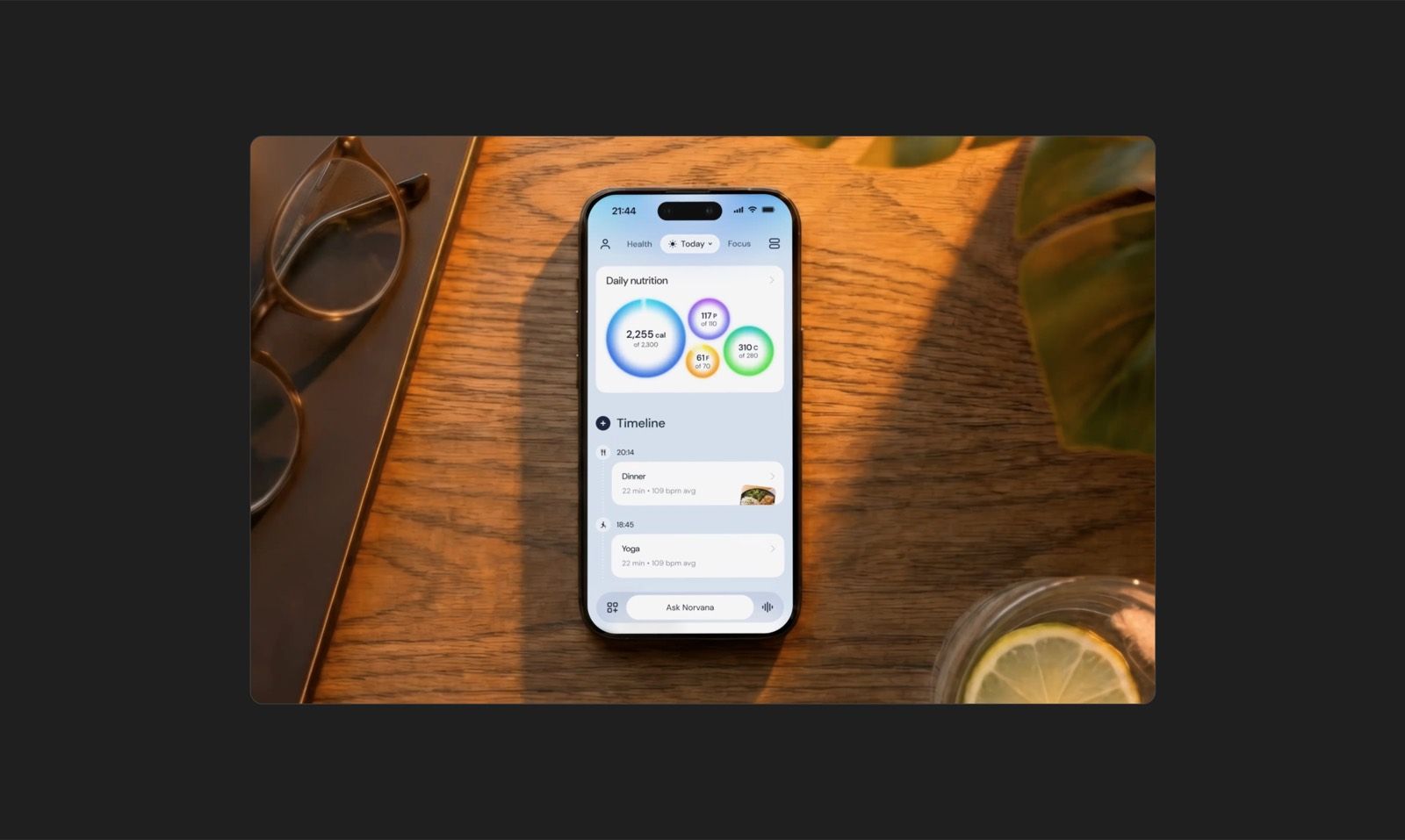
For Norvana, an AI health companion, The Gradient turned the raw idea into a functional iOS prototype, built by designers in code in twelve weeks. The prototype became the fundraising demo.
Their range across hard AI problems backs it up: AMS AI, an AI-native supply chain for hospitals; Investgaze, an AI investing product that surfaces analyst predictions to help beginners build a portfolio; and Azercell, a telecom–fintech app for 5M+ users. Recognition follows the work: their Lumiere platform took the UX Design Award 2025, picked from 93 nominees alongside Google and AWS.
Where it's not the fit: it's a deliberately small team that moves at a considered pace. If you need to sign next week and run at startup tempo, that's not an option.
K&Z Design
Perfect for a founder who wants direct control over a data-heavy UI build. No account manager or sales theater, just the people doing the work reporting to you.
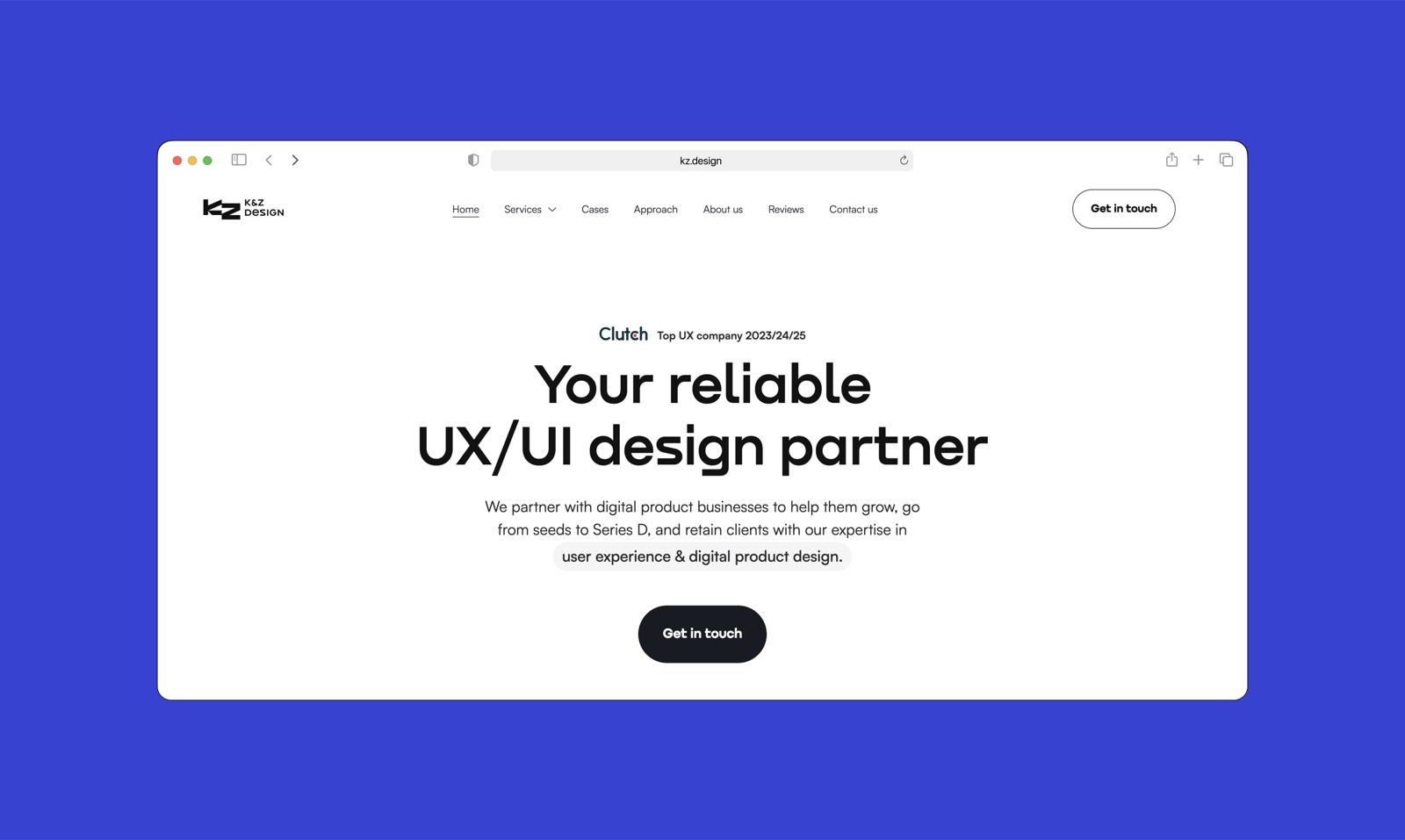
K&Z Design's whole pitch is operational: no middleman, daily updates, no sales calls, every task under the founder's eye. They work with dense, high-stakes interfaces, and they take on AI agent experiences and AI-powered builders directly.
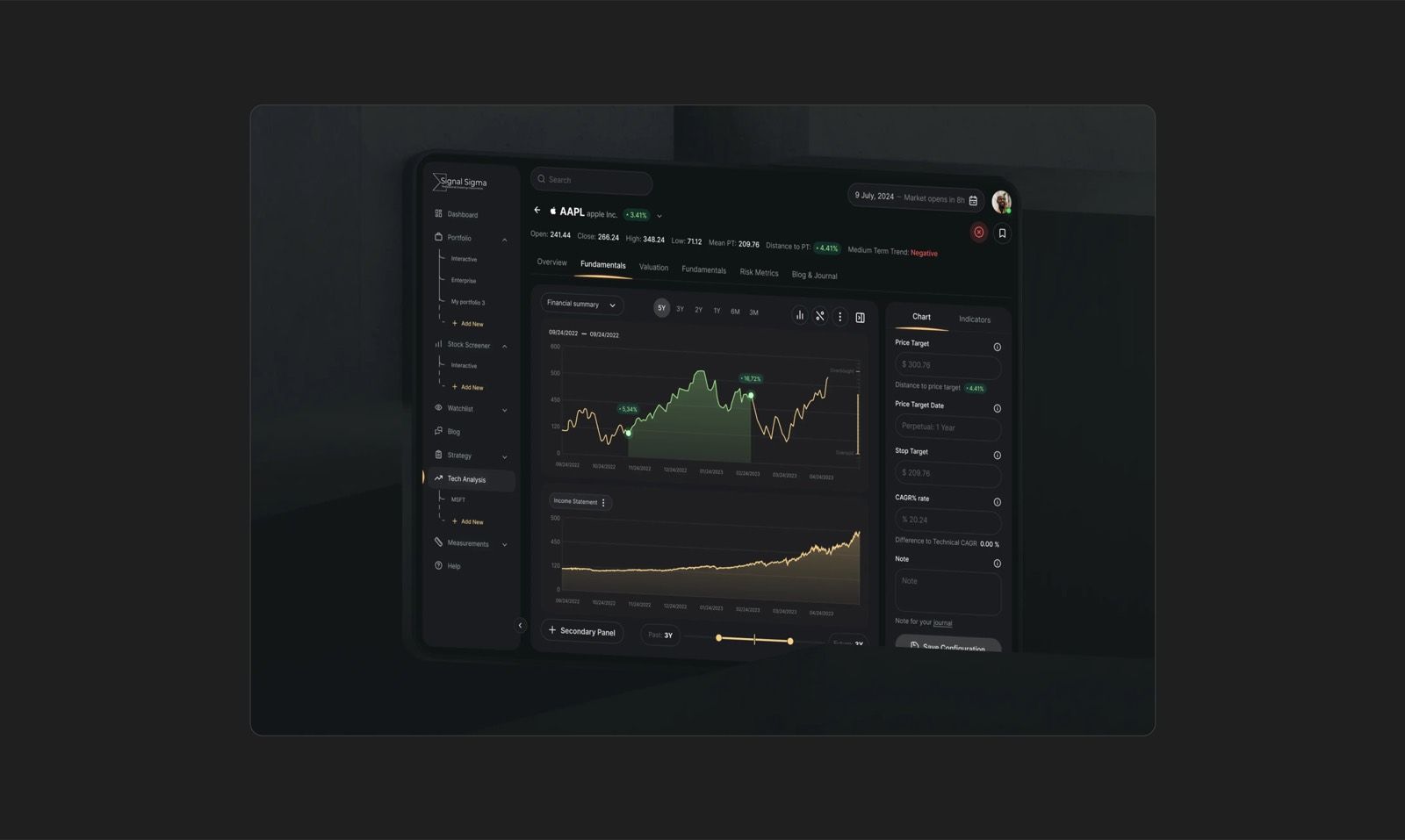
For Signal Sigma, an investment fintech SaaS, they designed a frontend that made complex financial tools legible to novices and experts alike. The client reported a 40% jump in average session length, 25% better onboarding completion, and an NPS of 85 after launch
They've also designed multiple AI-powered SaaS apps for Synthesis AI and worked across energy systems like drilling-rig analytics and high-voltage monitoring.
Where it's not the fit: if your challenge is inventing an interface with no precedent, a team with that specific track record (Habitat, The Gradient, Eleken) is the safer bet.
Recap: the 7 best UX/UI design agencies for AI startup products at a glance
Seven teams, seven different shapes of engagement. Use the table to match base, budget, and design focus to where your product is:
| Agency | Base | Pricing entry point | Design focus |
|---|---|---|---|
| Habitat | Ukraine · Netherlands | Free 48h audit · Blueprint $4,900 | Product UX/UI, design systems, brand and website shipped to code |
| Eleken | Ukraine · USA | $3,799/mo | Product UI/UX for SaaS (subscription) |
| Neuron | USA | ~$25K min · $150–199/hr | Enterprise UX for AI-driven products |
| UX studio | Budapest | On request | Research-led dedicated UX teams |
| Contrast Studio | Romania | 2-wk trial ~$5,149 | Embedded senior UI/UX (subscription) |
| The Gradient | Ukraine · UK | From ~$20K | AI-native product UX, live model-backed prototypes |
| K&Z Design | Remote | On request | Founder-direct UI/UX for data-heavy products |
How to choose the right partner
Start by being honest about what you need, then match the engagement model to it: a from-scratch build needs a partner that can own the whole interface, ongoing work requires an embedded or subscription team, and a deep enterprise problem needs research-led depth.
If you want a partner that takes the interface all the way to running code, Habitat is the right choice. To see how we'd approach your project, get our free 48-hour product audit: send us a URL or Figma link, and we'll come back with a few specific things we'd change and why.